Thyroid Function and Hormone Optimization: Why T3 and T4 Levels Matter More Than You Think
Most of the fatigue, weight gain, brain fog, and low mood I see in my exam room traces back to hormones behaving badly. And when we go looking, the thyroid is often part of the story, even when a patient has been told for years that their labs are "normal." The problem is that "normal" on a standard thyroid panel usually means one number, TSH, sitting somewhere inside a reference range that spans nearly a decade of physiology.
If you have felt off for months or years and your primary care doctor has waved you along because your TSH is 3.4, this article is for you. Thyroid physiology is more interesting, and more clinically useful, than the five-minute version you probably received.
What TSH Actually Tells You (and What It Doesn't)
TSH, thyroid stimulating hormone, is made in the pituitary gland. It is the signal from the brain telling your thyroid to produce more or less hormone. When people say "your thyroid is normal," they almost always mean your TSH falls inside the lab's reference range, typically about 0.4 to 4.5 mIU/L.
Here is the catch. TSH is a pituitary signal, not a measurement of the hormone your cells actually use. It tells you what the brain is asking for. It does not tell you what the thyroid is making, whether that hormone is being converted properly, or whether your tissues can use it. Two patients with identical TSH values can have very different clinical pictures because their downstream hormones, T4 and T3, may be doing very different things.
In our practice, we have seen patients with a TSH of 2.8 who feel terrible, and patients with a TSH of 3.9 who feel perfectly well. The number in isolation is not enough.
T4 and T3: The Actual Working Hormones
Your thyroid gland produces mostly T4 (thyroxine) and a small amount of T3 (triiodothyronine). T4 is the storage form. Think of it as unactivated potential. T3 is roughly four times more potent and is the hormone that actually enters your cells, binds to nuclear receptors, and drives metabolism, mitochondrial function, body temperature, cognition, and mood.
The conversion of T4 to T3 happens mostly in your liver, gut, and peripheral tissues via enzymes called deiodinases. This conversion is where many patients quietly run into trouble. You can have plenty of T4 on your labs and still feel hypothyroid because you are not converting it well to T3.
Things that impair T4-to-T3 conversion:
- Chronic stress and elevated cortisol
- Caloric restriction, especially prolonged low-carb or low-calorie dieting
- Inflammation from any source, including autoimmune disease, gut dysbiosis, or metabolic syndrome
- Nutrient deficiencies, particularly selenium, zinc, iron, and vitamin D
- Certain medications, including beta blockers and amiodarone
- Heavy alcohol use
There is also reverse T3, an inactive isomer the body produces when it wants to slow things down. Under stress or illness, more of your T4 gets shunted into reverse T3, which occupies receptors without activating them. High reverse T3 can produce classic hypothyroid symptoms even when TSH and free T4 look fine.
The Panel I Actually Order
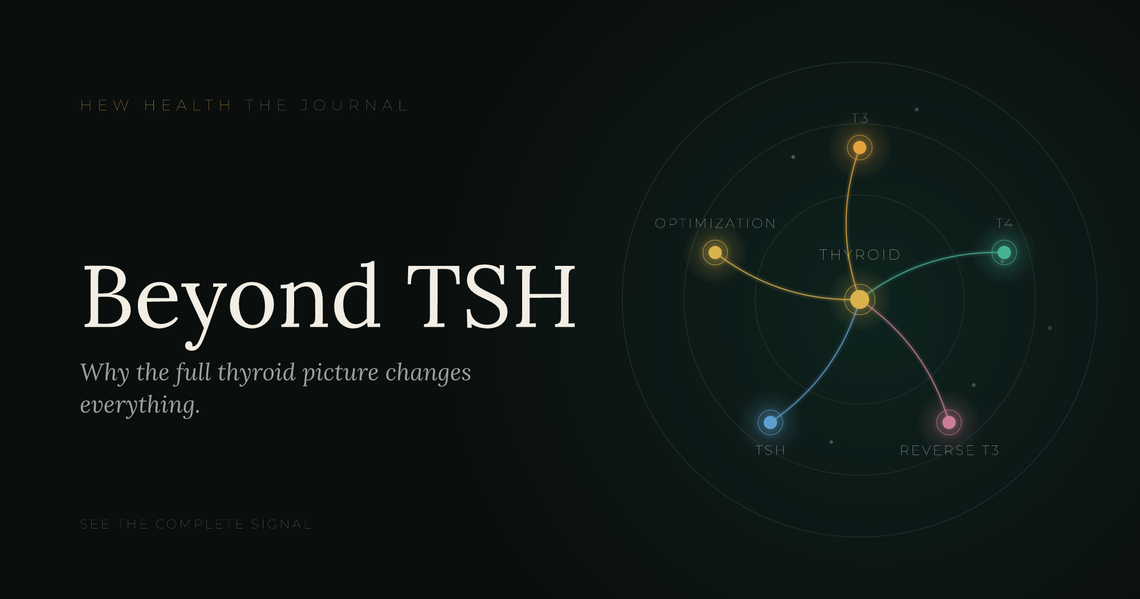
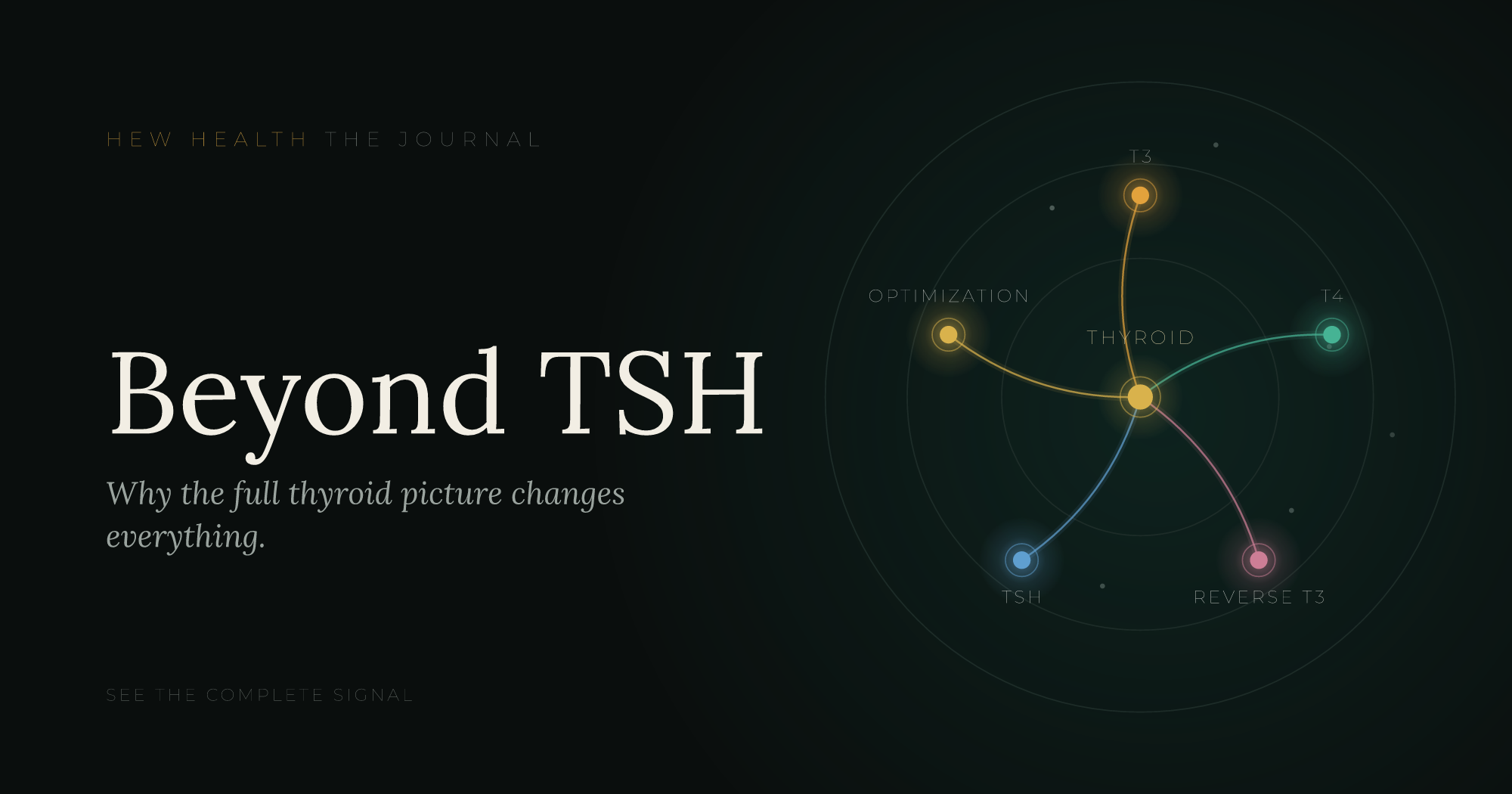
A meaningful thyroid workup includes more than TSH. When a patient comes in with symptoms that could be thyroid-related, I want to see:
- TSH
- Free T4
- Free T3
- Reverse T3
- Thyroid peroxidase antibodies (TPO) and thyroglobulin antibodies
- Sometimes total T3 and thyroid-binding globulin, depending on the clinical picture
Antibodies matter because Hashimoto's thyroiditis is the most common cause of hypothyroidism in the United States, and it can be present for years before TSH ever drifts out of range. I have found patients with TPO antibodies in the several hundreds whose TSH was still 2.1. Those patients often feel much better once we address the underlying autoimmunity, even before medication becomes necessary.
Why This Matters for Hormone Optimization
Thyroid does not operate in isolation. It is deeply entangled with your sex hormones, adrenal output, and metabolic hormones like insulin. When we work on hormone optimization in men and women, we cannot ignore the thyroid or we will get incomplete results.
A few of the interactions I explain to patients:
Estrogen and thyroid. Estrogen raises thyroid-binding globulin, which binds up circulating thyroid hormone and lowers the free (active) fraction. Women starting oral estrogen sometimes develop functional hypothyroid symptoms that resolve with a thyroid dose adjustment or a switch to transdermal delivery.
cedTestosterone and thyroid. Low testosterone in men often coexists with sluggish thyroid conversion. Correcting one without evaluating the other leaves symptoms on the table. I have had male patients whose energy and libido did not fully respond to testosterone until we also addressed a low free T3.
Cortisol and thyroid. Chronic elevated cortisol suppresses TSH at the pituitary and impairs peripheral T4-to-T3 conversion. This is why the person running on caffeine and four hours of sleep often has a "normal" TSH with a suppressed free T3 and elevated reverse T3. Fix the sleep and the stress physiology, and thyroid numbers frequently improve on their own.
Insulin and thyroid. Insulin resistance and thyroid dysfunction feed each other. Suboptimal thyroid function slows metabolism and encourages weight gain, which worsens insulin resistance, which further impairs thyroid conversion. This is one reason Weight Management protocols work better when we address thyroid function as part of the picture.
Symptoms Worth Taking Seriously
The classic hypothyroid textbook list (fatigue, cold intolerance, constipation, dry skin, hair thinning, weight gain, depression) is real, but symptoms often show up more subtly in the 35 to 58 age group. Patients tell me things like:
- "I sleep eight hours and still wake up tired."
- "My workouts don't do what they used to."
- "I've had to add another layer at the office."
- "My eyebrows are thinning at the outer edge."
- "My cholesterol jumped and I haven't changed anything."
- "I can't lose weight even eating less."
Elevated LDL cholesterol, in particular, is an under-recognized clue. Thyroid hormone regulates LDL receptor expression in the liver. A sudden rise in cholesterol in someone who has not changed diet or exercise deserves a thyroid look before a statin conversation.
What Treatment Actually Looks Like
Not everyone with a suboptimal thyroid needs medication. Sometimes the fix is nutritional (selenium and iron repletion, adequate iodine but not excess), sometimes it is stress and sleep, sometimes it is addressing gut inflammation, and sometimes it is autoimmune modulation.
When medication is warranted, standard levothyroxine (T4 only) works well for many patients but not all. Some patients convert T4 to T3 poorly and continue to feel unwell on levothyroxine alone despite a "perfect" TSH. For those patients, combination therapy with T4 and T3, or in select cases desiccated thyroid extract, can be appropriate. This is a nuanced decision that depends on labs, symptoms, cardiac history, and patient preference.
The goal is not to chase a lab number. The goal is a patient who feels like themselves again, with labs that support long-term health.
The Bottom Line
If you have been told your thyroid is fine but you do not feel fine, you deserve a more complete evaluation than a single TSH. Free T3, reverse T3, and antibodies frequently change the story. And thyroid function is not a standalone silo. It sits inside the broader hormonal ecosystem we address every day.
If any of this resonates with your experience, I invite you to reach out to our team for a comprehensive evaluation. We take the time to look at the whole picture, because that is where the answers usually live.
Related from Hew Health