Thyroid Function and Hormone Optimization: Understanding the Connection
When a patient comes to us exhausted, gaining weight despite eating less, and convinced their hormones are "off," the conversation almost always turns to the thyroid eventually. And it should. The thyroid sits at the center of metabolic regulation, and it talks constantly with the sex hormones, cortisol, and insulin. Treat one in isolation and you often miss the real story.
This is one of the more common reasons hormone optimization plans stall. A patient starts on estradiol or testosterone, feels better for a few weeks, then plateaus. We check the thyroid panel properly, and the answer is sitting right there.
Why the Thyroid Influences Almost Everything Else
Thyroid hormone (specifically T3, the active form) sets the metabolic rate of nearly every cell in your body. It regulates how efficiently mitochondria produce ATP, how fast your gut moves, how your liver clears estrogen, and how sensitive your tissues are to other hormones. When T3 is low at the cellular level, estrogen receptors become less responsive, testosterone feels less effective, and cortisol patterns flatten out.
So a patient on a well-dosed hormone optimization protocol with untreated subclinical hypothyroidism will often report that the therapy "isn't working anymore." The hormones are there. The receptors just aren't listening.
The Panel Most People Have Never Had Run
In a standard primary care visit, you typically get a TSH. Maybe a free T4 if your physician is thorough. That tells us very little about how your thyroid is actually functioning at the tissue level.
In our practice, the baseline thyroid workup includes:
- TSH
- Free T4
- Free T3
- Reverse T3
- Thyroid peroxidase antibodies (TPO)
- Thyroglobulin antibodies
The reason matters. A patient can have a "normal" TSH of 2.8 and a free T3 hovering at the bottom of the reference range, with reverse T3 elevated from chronic stress or dieting. That patient is functionally hypothyroid even though their TSH looks fine. The standard lab won't catch it. The expanded panel will.
Antibodies matter too. Hashimoto's thyroiditis is the most common cause of hypothyroidism in the United States, and we see it constantly in women in their 40s and 50s presenting for perimenopausal symptoms. The thyroid attack often predates the menopause transition by years, and the symptoms overlap so much that one masquerades as the other.
How Sex Hormones and Thyroid Hormones Talk to Each Other
Estrogen increases thyroid-binding globulin (TBG), the protein that carries thyroid hormone in the blood. When TBG goes up, more thyroid hormone is bound and less is free to act on tissues. This is why women starting oral estrogen sometimes develop new hypothyroid symptoms, and why women already on thyroid medication may need a dose adjustment when estrogen therapy begins.
Transdermal estradiol affects TBG less than oral preparations, which is one reason we tend to favor it in patients with thyroid issues. The route of administration genuinely changes the downstream biochemistry.
Testosterone has its own relationship with the thyroid. Low T3 can suppress SHBG and alter the free testosterone fraction. Men with untreated hypothyroidism often present with what looks like classic low testosterone (fatigue, low libido, brain fog), and addressing the thyroid sometimes resolves a meaningful portion of the symptom picture before we even consider testosterone optimization.
Progesterone supports T4-to-T3 conversion. Cortisol, when chronically elevated, blocks it. The patient who is overworked, undersleeping, and perimenopausal is often dealing with three or four hormone systems pulling against each other at once.
The Conversion Problem
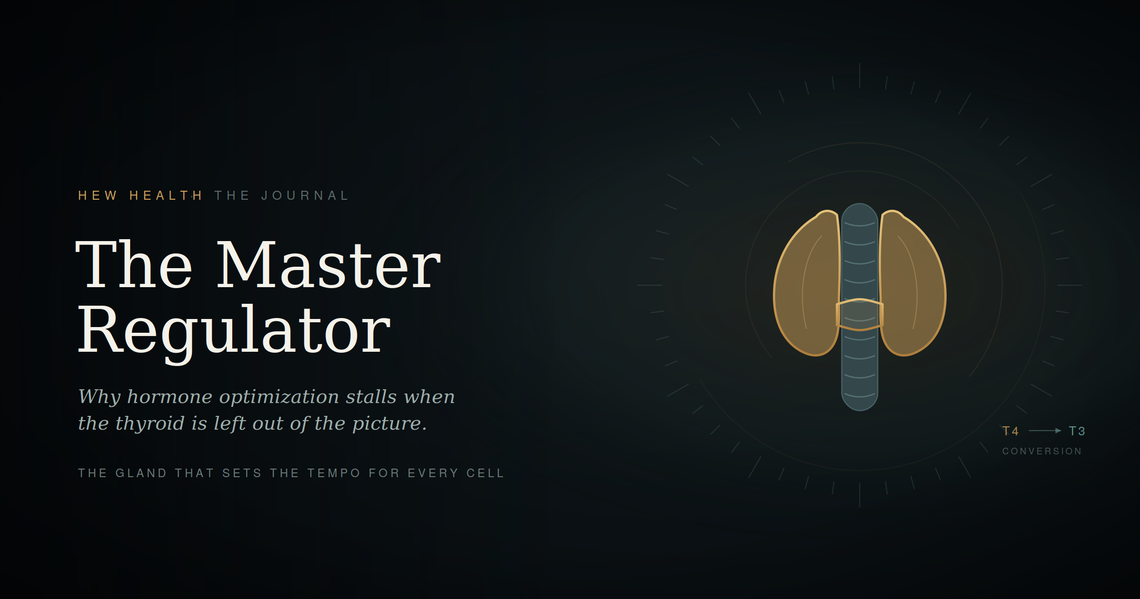
Your thyroid produces mostly T4, which is essentially a prohormone. It has to be converted to T3 in peripheral tissues (mostly the liver and gut) by enzymes called deiodinases. That conversion can be impaired by:
- Chronic caloric restriction or aggressive dieting
- Low selenium, zinc, or iron
- Elevated cortisol
- Inflammation
- Heavy alcohol use
- Certain medications, including some beta-blockers
This is why a patient on levothyroxine (T4 only) sometimes still feels hypothyroid despite a "normal" TSH. They're not converting well. In appropriate cases, we'll consider a combination approach using both T4 and T3, or natural desiccated thyroid, with careful monitoring. Not every patient needs this, and not every patient is a candidate. The decision is individual and based on labs, symptoms, and cardiovascular status.
What We Actually See in the Office
A 47-year-old woman comes in describing weight gain of fifteen pounds over two years, hair thinning, cold hands, brain fog, and irregular cycles. Her outside labs show TSH of 3.1 (called "normal"), and she's been told she's just perimenopausal. We run the full panel. Free T3 is at the floor. TPO antibodies are elevated at 340. Reverse T3 is high. She has Hashimoto's, and her symptoms are roughly 70% thyroid, 30% estrogen and progesterone shifts.
If we'd jumped straight to hormone optimization without addressing the thyroid, she would have felt marginally better and then plateaued. Treating both, sequentially and carefully, is what actually moves the needle.
The reverse happens with men. A 54-year-old executive presents with fatigue, low libido, and a total testosterone of 340. Easy diagnosis, right? Except his TSH is 4.2 and his free T3 is low. Optimize the thyroid first, recheck testosterone in eight weeks, and sometimes the testosterone has risen on its own by 100 points or more.
Lifestyle Inputs That Genuinely Matter
Thyroid function is sensitive to inputs most patients don't realize affect it. Adequate iodine (but not excessive, especially in autoimmune thyroid disease), selenium from a couple of Brazil nuts or a supplement, sufficient protein, and enough carbohydrate to support T4-to-T3 conversion all matter. Chronic ketogenic dieting can lower T3 in susceptible patients. So can prolonged intermittent fasting in women.
Sleep is non-negotiable. The pituitary releases TSH in a circadian pattern, and shift work or chronically delayed sleep disrupts the entire HPT axis. We've seen patients spend years on thyroid medication who actually had a sleep disorder driving their symptoms.
How We Sequence Treatment
When a patient comes in for hormone optimization, we don't treat the thyroid and the sex hormones as separate problems. We run the full picture first: thyroid panel, sex hormones, cortisol rhythm, metabolic markers, and nutrient status. Then we sequence interventions. Usually the thyroid and adrenals get attention first, because correcting them changes how the sex hormones behave. Then we layer in estradiol, progesterone, or testosterone as appropriate, and recheck everything in 8 to 12 weeks.
Patients sometimes find this slower than they expected. The payoff is that the protocol actually holds, rather than producing a few good weeks followed by frustration.
When to Have This Conversation
If you're already on hormone optimization and feel like the effect has faded, if you've been told your thyroid is "normal" but your symptoms say otherwise, or if you're entering the perimenopausal or andropausal years and want a full picture rather than a partial one, the thyroid deserves a careful look. A proper workup takes one blood draw and a thoughtful conversation about your symptoms, history, and goals.
If you'd like a more complete evaluation of how your thyroid and hormones are interacting, request a consultation with our team and we'll put together a plan based on your specific labs and presentation.