Beyond the Scale: How Sleep, Stress, and Hormone Optimization Shape Weight Management Outcomes
Most people who walk into our practice frustrated with their weight have already tried the obvious things. They've counted calories, joined a gym, cut carbs, tried intermittent fasting. Some have lost twenty pounds only to watch it creep back over eighteen months. When we sit down and actually map out what's happening in their bodies, the answer is rarely about willpower or caloric arithmetic. It's about sleep architecture, cortisol patterns, thyroid function, and sex hormones that have quietly shifted over the last decade.
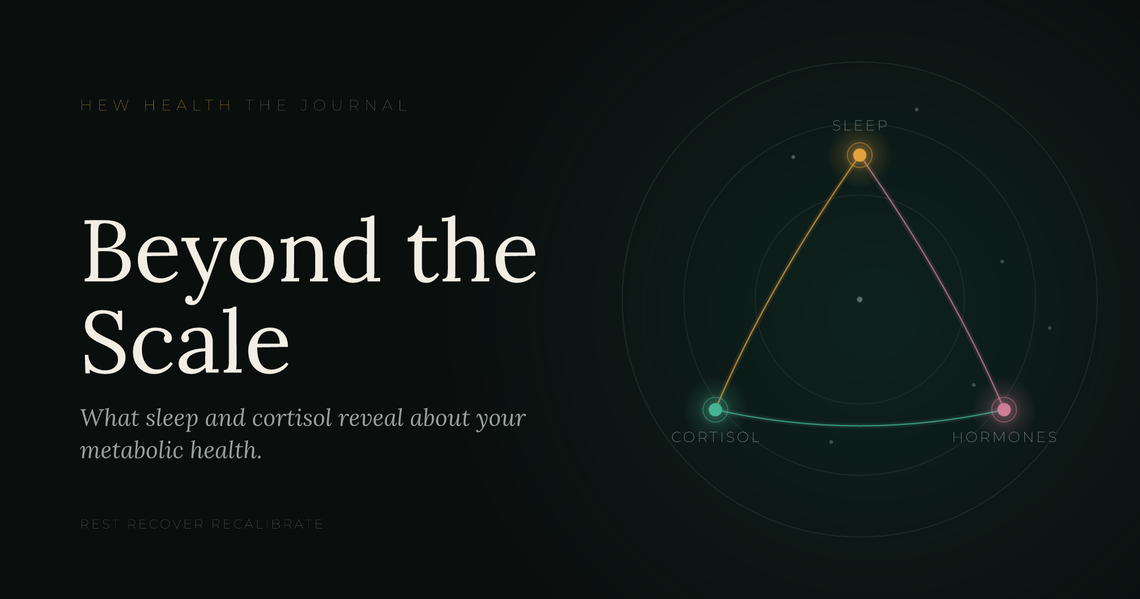
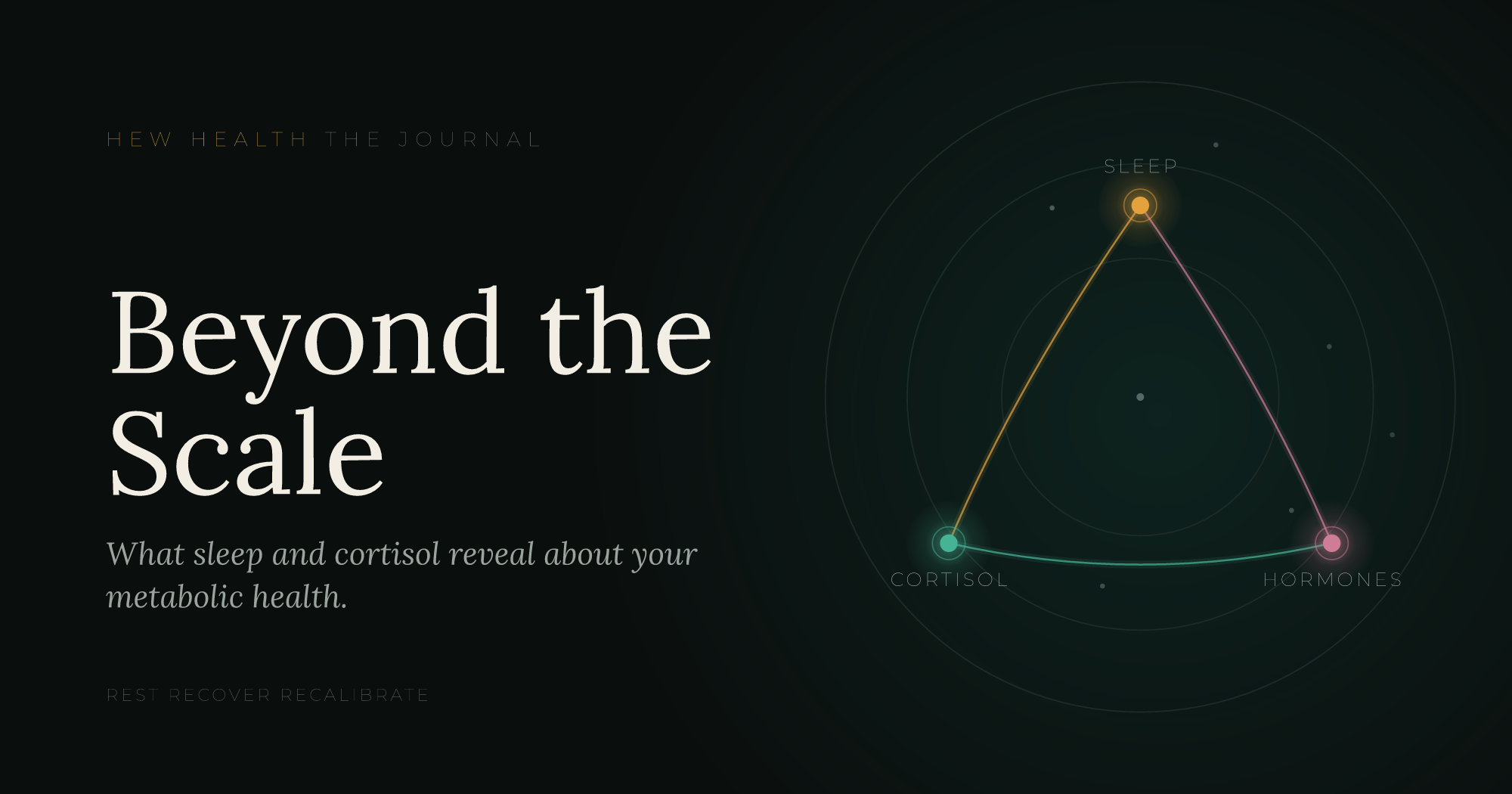
The scale measures one variable. Your body is running dozens of them in the background, and if those are misaligned, you can eat perfectly and still stall. Here's how the pieces actually fit together, and what we look at when someone's Weight Management plan isn't producing the results they expected.
Sleep: The Variable Most People Underestimate
When you sleep less than about six and a half hours a night, several things happen within days. Ghrelin, the hormone that drives hunger, rises. Leptin, which signals satiety, drops. Insulin sensitivity in your muscle tissue falls by roughly 20 to 30 percent within a week of restricted sleep, meaning the same bowl of pasta produces a bigger insulin spike and more fat storage than it would if you were well-rested.
Cortisol is the other piece. Poor sleep pushes evening cortisol higher, which is exactly backward from how the rhythm should run. Cortisol should peak in the morning and taper down through the day. When it stays elevated at night, you get that wired-but-tired sensation, worse sleep the following night, and a compounding cycle. We see patients who are doing everything right nutritionally, training four days a week, and still holding onto abdominal fat because their sleep is fragmented from untreated apnea or nightly alcohol.
Practical markers we track: total sleep time, wake-after-sleep-onset, and heart rate variability trends from a wearable if the patient uses one. If someone snores, has a thick neck, or wakes unrefreshed, we push for a formal sleep study before we go any further with a weight protocol. Treating sleep apnea has, in our experience, done more for stubborn weight in men over 45 than almost any dietary intervention.
Chronic Stress and the Cortisol Problem
Stress isn't just a feeling. It's a measurable endocrine state. When your sympathetic nervous system is chronically activated (deadlines, poor sleep, marital strain, over-training), your adrenals produce cortisol at levels and patterns your body wasn't designed to handle for years at a time.
Sustained cortisol elevation does a few specific things relevant to weight. It promotes visceral fat deposition around the abdomen. It breaks down muscle protein for gluconeogenesis, so you lose lean mass even while gaining fat. It blunts thyroid conversion from T4 to the active T3, slowing your metabolic rate. And it drives cravings for calorie-dense food through its effect on reward pathways in the brain.
The patients who make the most progress are often the ones who accept that they need to change something structural about their week, not just their macros. That might mean a real boundary around work hours, two 20-minute walks a day without a phone, or actually taking the vacation days they've accrued. We sometimes measure a four-point salivary cortisol curve to see the shape of the pattern, because a single morning serum cortisol tells you almost nothing about how the axis is behaving over 24 hours.
Where Hormone Optimization Fits
By the mid-40s, most people have measurable declines in the hormones that regulate body composition. In men, total and free testosterone typically drift down starting in the early 30s, with a steeper decline after 45. Lower testosterone correlates with more visceral fat, reduced muscle mass, and lower resting metabolic rate. In women, the perimenopausal transition brings unpredictable estrogen fluctuations and a progressive drop in progesterone, both of which affect insulin sensitivity, sleep quality, and where fat is stored (hips and thighs in the reproductive years, abdomen after menopause).
Thyroid function deserves its own paragraph. A TSH in the "normal" range of 4.0 with a free T3 at the bottom of the reference range is not optimal for someone trying to change body composition, even if a standard lab report flags nothing. We look at TSH, free T4, free T3, reverse T3, and thyroid antibodies as a full panel. Subclinical hypothyroidism and euthyroid sick patterns are common in patients under chronic stress or in aggressive caloric deficits, and both will stall weight progress.
Hormone optimization isn't about chasing youthful numbers or promising anyone a specific outcome. When we identify a genuine deficiency and correct it thoughtfully, patients often find that the same nutrition and training program that wasn't working suddenly starts producing changes. Muscle recovers better. Sleep deepens. The abdominal fat that felt fixed begins to move. Optimization is a tool, not a magic bullet, and it works best inside a larger plan that addresses sleep, stress, and metabolic health together.
What a Comprehensive Workup Actually Looks At
When someone comes to us for Weight Management and wants to understand why their body isn't responding, we typically look at:
- A full metabolic panel including fasting insulin, fasting glucose, and HOMA-IR (not just glucose and A1c)
- Complete thyroid panel including free T3, reverse T3, and antibodies
- Sex hormones: total and free testosterone, estradiol, progesterone, SHBG, DHEA-S
- Cortisol pattern, often via salivary or urine testing rather than a single blood draw
- Inflammatory markers such as hs-CRP and ferritin
- Vitamin D, B12, and magnesium status
- Sleep quality assessment, and a sleep study when clinically indicated
- Body composition with DEXA or a validated bioimpedance device, so we're tracking fat and lean mass separately rather than just total weight
This kind of workup gives you the actual picture. Two patients with identical BMIs and identical diets can have completely different underlying physiology, and the interventions that will work for each of them look nothing alike.
Putting It Together
The patients who succeed long-term with Weight Management tend to share a few habits. They protect sleep the way they protect a business meeting. They lift heavy things two to four times a week to preserve muscle, because muscle is metabolically expensive tissue and the best insurance policy against age-related weight gain. They eat enough protein (typically 0.8 to 1.0 grams per pound of goal body weight). They manage stress with actual practices rather than good intentions. And when their labs show that a hormone is genuinely low, they address it under proper medical supervision rather than pushing harder on diet and exercise alone.
The scale is a lagging indicator of many upstream variables. If you keep pulling the same lever and nothing changes, the answer usually isn't more discipline. It's a more accurate map of what's actually happening in your body.
If you've been working hard and not seeing the results you expect, or you want a workup that goes beyond a standard annual physical, contact our team to discuss what a comprehensive evaluation might look like for you.
A Note on Individual Variation
Every protocol we design is specific to the patient in front of us, based on labs, history, and goals. Nothing in this article should be taken as medical advice for your particular situation. Hormone optimization, sleep interventions, and metabolic protocols all carry considerations that need to be weighed by a physician who knows your full picture.
Related from Hew Health