How Hormone Optimization Protocols Support Energy, Focus, and Body Composition
Most of the people who walk into our practice asking about hormones don't lead with the word "hormones." They lead with a story. They tell me they used to hit the gym four mornings a week and now they can barely drag themselves through two. They tell me they read the same email three times before it registers. They tell me they've cut carbs, added protein, and still watch the scale creep up around the middle. By the time we sit down together, they've usually spent a year or two blaming stress, sleep, or age.
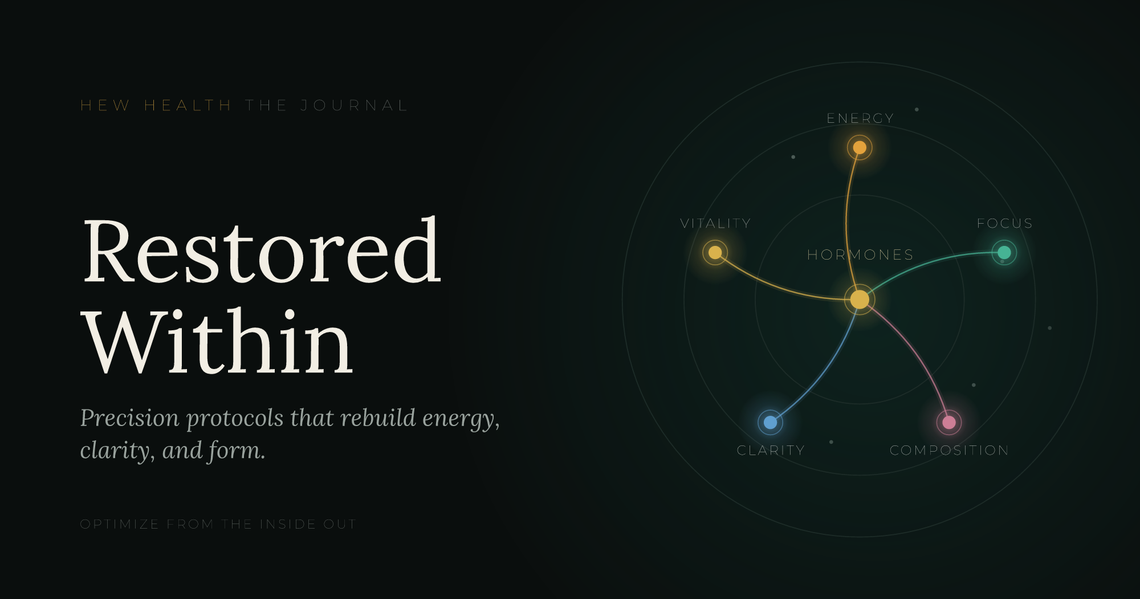
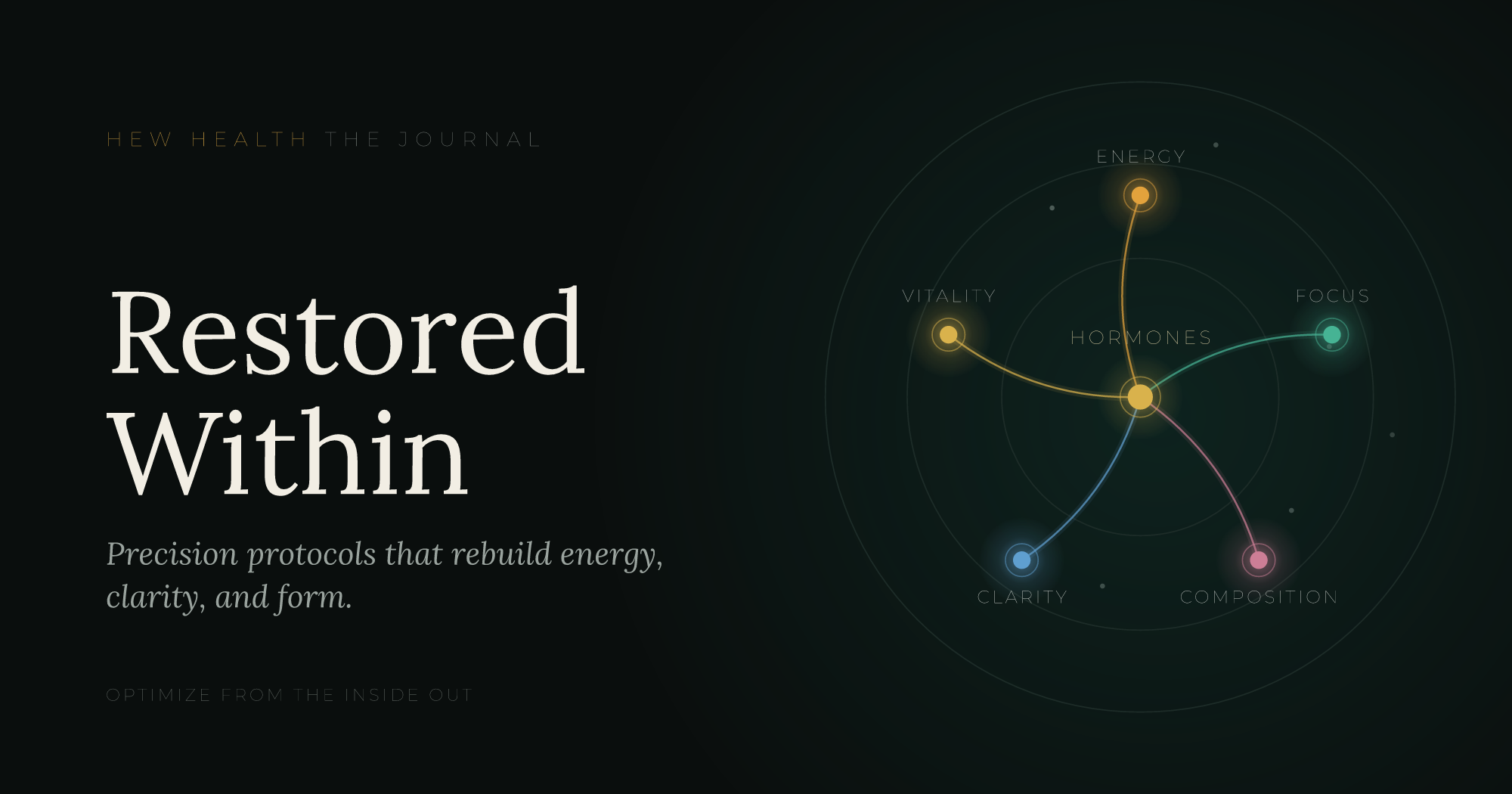
Sometimes those explanations are right. Often they're incomplete. Hormones sit underneath all three complaints (energy, cognitive sharpness, and body composition) because the endocrine system is the operating layer for how the body produces fuel, repairs tissue, and allocates cognitive resources. When that layer drifts, the surface symptoms follow.
What Actually Changes With Age
Testosterone in men typically declines around 1% per year starting in the mid-thirties, though the trajectory varies widely based on sleep quality, body fat percentage, alcohol intake, and chronic stress. In women, the perimenopausal transition can begin a full decade before the final menstrual period, with estradiol and progesterone fluctuating erratically before they fall. Thyroid output shifts. DHEA drops. Growth hormone pulsatility flattens.
None of this is a disease. It's biology behaving the way biology behaves. The question we care about clinically is whether the numbers on your labs, combined with the way you actually feel and function, warrant a considered protocol. That's a conversation, not a formula.
Energy: More Than Just Feeling Tired
When patients describe fatigue, I try to get specific. Is it the 3 p.m. crash? Waking unrefreshed at 6 a.m.? A general dimming, where nothing feels acutely wrong but everything feels heavier? Each pattern points somewhere slightly different.
Testosterone influences mitochondrial function and red blood cell production, which is part of why low levels often show up as exercise intolerance before they show up as anything else. Thyroid hormone sets the metabolic thermostat for every cell in the body, so subclinical hypothyroidism can produce a fatigue that sleep doesn't fix. Progesterone has a calming effect on the central nervous system through its interaction with GABA receptors, which is why perimenopausal women often describe a jittery, wired-but-tired quality to their exhaustion.
A well-designed hormone optimization protocol addresses the specific deficit, not a generic idea of "low energy." In our practice, we often see patients who were prescribed something reasonable but not calibrated to their pattern, then told the therapy didn't work. Calibration matters. So does patience. Hormonal shifts don't complete in two weeks.
Focus and Cognitive Clarity
The brain is dense with hormone receptors. Estradiol supports synaptic plasticity in regions involved in verbal memory and executive function, which is part of why women in perimenopause frequently describe word-finding difficulty and a strange sense of mental static. Testosterone influences dopaminergic tone, which affects motivation and the ability to sustain attention on tasks that aren't immediately rewarding. Thyroid hormone affects processing speed in a way that's obvious to anyone who has ever been treated for hypothyroidism and felt the fog lift.
I want to be careful here. Hormone optimization is not a cognitive enhancer, and I don't frame it that way to patients. What we can reasonably expect, when someone's levels have drifted meaningfully below their personal baseline and we bring them back into an appropriate range, is that the cognitive symptoms tied to that drift often ease. Sleep improves, which improves cognition. Mood stabilizes, which improves cognition. The direct receptor effects contribute as well.
Patients frequently tell me that the mental clarity change is the one they notice first, sometimes before the energy or the body composition shifts. That's consistent with what we understand about how quickly the brain responds to changes in circulating hormone levels compared to how slowly muscle and fat tissue remodel.
Body Composition: The Long Game
This is the piece that requires the most honest conversation. Body composition is downstream of dozens of variables: protein intake, resistance training, sleep quality, alcohol, cortisol patterns, insulin sensitivity, and yes, sex hormones. Optimizing one input while ignoring the others produces disappointment.
That said, hormones matter. Testosterone drives muscle protein synthesis and influences where fat is stored. Estradiol in women protects against visceral fat accumulation and supports lean mass retention. Thyroid hormone sets basal metabolic rate. When any of these are meaningfully off, the same diet and training program that used to work stops working, and no amount of discipline compensates for a physiological headwind.
What we typically see, when a hormone optimization protocol is paired with actual work in the kitchen and the gym, is that patients start responding to their effort again. The training produces visible changes. The protein intake translates into recovery. The scale moves, gradually, in the direction they've been trying to move it for years. This is not a shortcut. It's the removal of an obstacle.
What a Thoughtful Protocol Looks Like
A responsible workup includes more than a single testosterone or TSH value. We look at:
- Total and free testosterone, SHBG, estradiol, and DHT in men, along with a complete metabolic and hematologic panel
- Estradiol, progesterone, FSH, LH, and often testosterone and DHEA in women, interpreted alongside menstrual pattern and symptom timing
- Full thyroid studies including free T3, free T4, reverse T3, and TPO antibodies
- Fasting insulin and A1c, because insulin resistance changes how every other hormone behaves
- Vitamin D, ferritin, and B12, which are frequently the low-hanging fruit
Then we talk. About your history, your goals, the trade-offs of different approaches, the monitoring cadence, and the realistic timeline. Some patients do well on protocols involving bioidentical testosterone, progesterone, or estradiol. Some benefit more from thyroid support. Some need a period of addressing sleep and metabolic health before we introduce anything else. There is no single correct answer, and anyone who tells you there is should make you skeptical.
What This Isn't
Hormone optimization is not a fountain of youth. It doesn't reverse aging, and I'd steer you away from anyone who claims otherwise. It's a clinical intervention with real benefits and real considerations, appropriate for some patients and not others. We monitor. We adjust. We stop or change course when the data or the patient's experience tells us to.
The patients who get the most out of these protocols tend to be the ones who show up for the rest of the work too. They sleep seven or eight hours. They lift weights. They eat protein. They manage their alcohol. Hormones amplify what you're doing. They don't replace it.
Moving Forward
If the pattern I described at the top sounds familiar (the energy that used to be reliable, the focus that used to be sharp, the body that used to respond), it's worth a proper evaluation. Not a fifteen-minute visit and a script. An actual conversation about what your labs show, what your symptoms suggest, and what a considered protocol might look like for you specifically.
To discuss whether hormone optimization makes sense for your situation, contact our team to request a consultation. We'll take the time to look at the full picture.
Related from Hew Health