Cortisol, Testosterone, and Estrogen: How Hormonal Imbalances May Be Undermining Your Energy and Focus
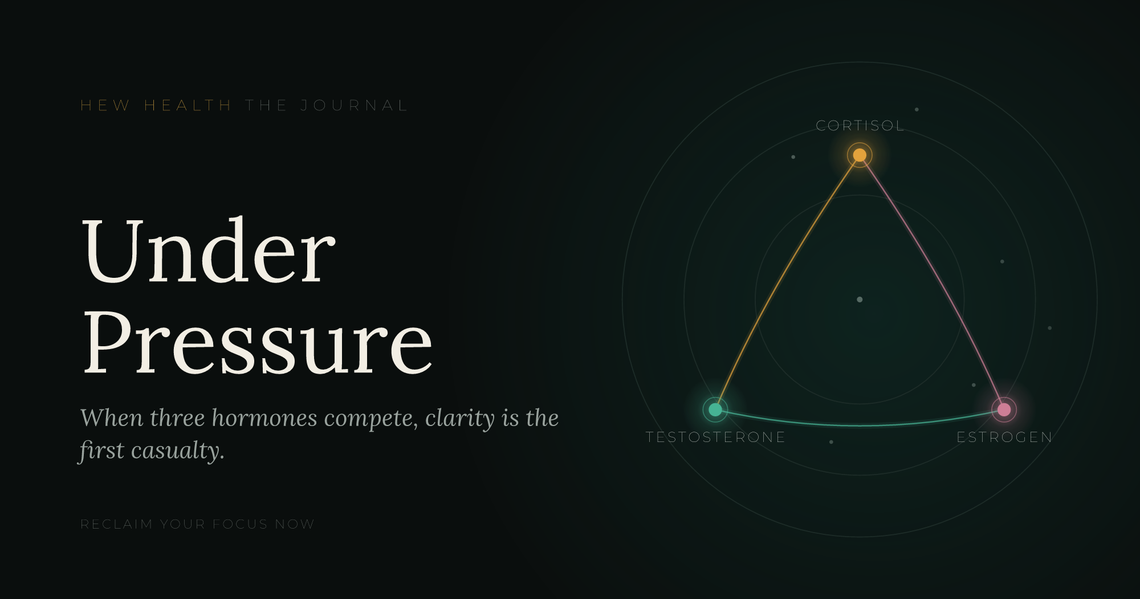
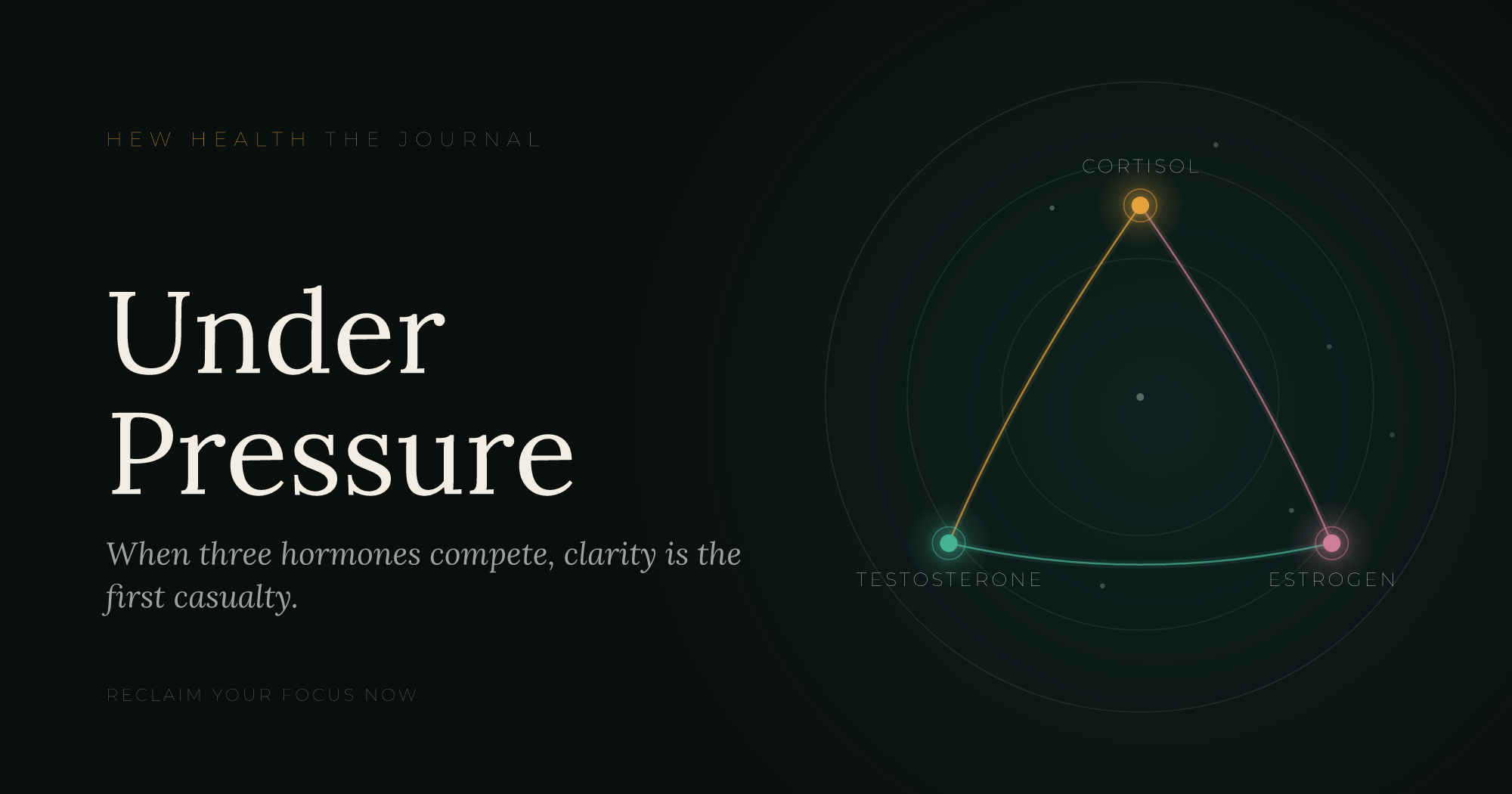
Most of the fatigue I see in my exam room is not a sleep problem. It looks like one on the surface. You get seven hours, maybe eight, and still drag through your afternoon. You blame your schedule, your kids, your inbox. But when we run the labs, a pattern often emerges: cortisol timed wrong, testosterone drifting low, estrogen swinging through a wider arc than it used to. These three hormones talk to each other constantly, and when the conversation breaks down, your energy and focus are usually the first casualties.
This is the kind of pattern that gets missed in a rushed fifteen-minute visit. A single TSH comes back normal, you're told your thyroid is fine, and the conversation ends there. In our practice we spend more time on the story behind the numbers, because the story is where the real information lives.
Cortisol: The Rhythm Matters More Than the Number
Cortisol is your primary alertness hormone. It should peak within about 30 to 45 minutes of waking (the cortisol awakening response), taper through the day, and reach its lowest point around midnight. That curve is what allows you to feel sharp at 9 a.m. and sleepy at 10 p.m.
When patients describe feeling "wired but tired," what I usually find is a flattened or inverted curve. Cortisol is low in the morning, when you need it, and creeping upward in the evening, when you don't. The causes are rarely mysterious: chronic under-sleeping, alcohol most nights, high-intensity training stacked on top of a demanding job, unmanaged psychological stress, and sometimes a period of illness or grief that the body never fully closed out.
Symptoms I hear repeatedly:
- Needing 20 minutes and two coffees to feel human in the morning
- An energy crash between 2 and 4 p.m.
- A second wind at 10 p.m. that turns into scrolling until midnight
- Waking at 3 a.m. with a racing mind
- Feeling more anxious than the situation warrants
A single blood cortisol drawn at 8 a.m. tells you very little. A four-point salivary or dried urine panel, sampling across the day, tells you the shape of the curve. That shape is what we treat, through sleep architecture, training load adjustments, protein and light exposure timing in the morning, and, when appropriate, targeted supplementation. Medication is rarely the first move.
Testosterone: Not Just a Men's Issue
In men, testosterone decline is gradual and often invisible until it isn't. By the mid-40s, many of the men I see have total testosterone in the 300s or low 400s, with free testosterone at the bottom of the reference range. Reference ranges, by the way, are built from a population that includes plenty of unwell people. Being "in range" is not the same as being optimal for how you want to function.
What low testosterone actually feels like, in the words of my patients: workouts that used to build muscle now just make you sore, motivation for projects you used to enjoy has thinned out, your reaction time in conversations feels a beat slow, and your interest in intimacy has quietly declined without you naming it. Focus suffers because dopamine signaling suffers. This is a real neurochemical story, not a vanity issue.
Women produce testosterone too, roughly a tenth of what men do, and it matters for the same reasons: cognitive drive, muscle maintenance, libido, mood stability. Testosterone in women is one of the most under-measured hormones in primary care. When we do measure it, particularly in women in their 40s and 50s, we frequently find levels that help explain the "brain fog" they've been describing for years.
Hormone optimization for either sex is not a matter of pushing numbers to the top of the chart. It's a matter of restoring a physiologic range that matches how you want to feel and function, with careful monitoring of hematocrit, estradiol, PSA in men, and clinical symptoms throughout.
Estrogen: The Wider the Swings, the Worse You Feel
Perimenopause is where I see the most diagnostic confusion. A woman in her mid-40s comes in with new anxiety, disrupted sleep, heavier or more erratic periods, weight gain around the midsection, and a sense that her memory isn't what it was. Her FSH is normal. Her estradiol, drawn on a random day, is normal. She's told everything looks fine.
The problem is that perimenopause is defined by variability, not deficiency. Estradiol can swing from 30 to 300 pg/mL within the same cycle. Those swings drive the symptoms. Progesterone, which usually declines earlier than estrogen, stops buffering the nervous system, and sleep quality deteriorates. Once sleep goes, cortisol dysregulates, and now you have three hormones out of sync reinforcing each other.
In men, estrogen matters too. Estradiol that is too low causes joint pain, low libido, and poor mood. Too high, often from excess adiposity converting testosterone to estradiol via aromatase, causes water retention, emotional lability, and gynecomastia. Balance is the goal.
How These Three Hormones Interact
Cortisol, testosterone, and estrogen share upstream precursors and downstream effects. Chronic cortisol elevation suppresses gonadotropin-releasing hormone at the hypothalamus, which lowers LH and FSH, which lowers testosterone and disrupts estrogen production. Poor sleep raises cortisol and lowers overnight testosterone production (most of your daily testosterone is made during deep sleep). Low estrogen in women raises cortisol reactivity to stress. Low testosterone in men worsens insulin resistance, which drives more visceral fat, which drives more aromatization to estradiol.
You cannot fix one of these in isolation and expect durable results. I've seen men started on testosterone by a telehealth clinic without any attention to their sleep apnea or their alcohol intake, and they feel better for six weeks, then plateau. I've seen women given progesterone alone when their cortisol curve was the primary driver of their insomnia. The whole system needs to be evaluated.
What a Real Workup Looks Like
When a patient comes in with fatigue and cognitive complaints, the labs I typically want include:
- Total and free testosterone, SHBG, estradiol (sensitive assay), DHEA-S
- Diurnal cortisol, ideally four points across the day
- FSH, LH, and progesterone timed to the cycle in premenopausal women
- Full thyroid panel including free T3, free T4, reverse T3, and TPO antibodies
- Fasting insulin and HbA1c, because insulin resistance distorts everything above
- Ferritin, B12, vitamin D, and a comprehensive metabolic panel
Then we sit down and actually talk. Sleep, alcohol, training, work stress, relationships, medications, supplement stack. The labs are one input. Your lived experience is another. The plan comes from both.
Where to Start
If you recognize yourself in any of this, the useful first step is not to order a supplement based on a podcast. It's to get a complete picture of what's actually happening in your endocrine system, interpreted by someone who will spend more than ten minutes with you. If you'd like that kind of evaluation, you can request a consultation with our team and we'll walk through what a workup would look like for your situation.
Energy and focus are not luxuries. They're how you show up for the work and people that matter to you. When the hormonal foundation is right, most of the other health goals get easier. When it's off, everything feels like pushing a car uphill.
Related from Hew Health