Why Cortisol Imbalance Undermines Your Hormone Optimization Goals (And What to Do About It)
If you have started a hormone optimization protocol and feel like the results are stalling, cortisol is one of the first places I look. Patients arrive with a careful testosterone or estradiol plan, dialed-in dosing, clean labs on paper, and still report flat energy, stubborn abdominal weight, poor sleep, and a libido that refuses to come back online. The missing variable is almost always the stress axis.
Cortisol is not the enemy. It is the hormone that wakes you up in the morning, mobilizes glucose when you need it, dampens inflammation, and keeps blood pressure in a reasonable range. The problem is that modern life keeps the signal switched on at the wrong times and at the wrong amplitude. When that happens, every other hormone in the system has to negotiate around it.
How Cortisol Talks Over Your Other Hormones
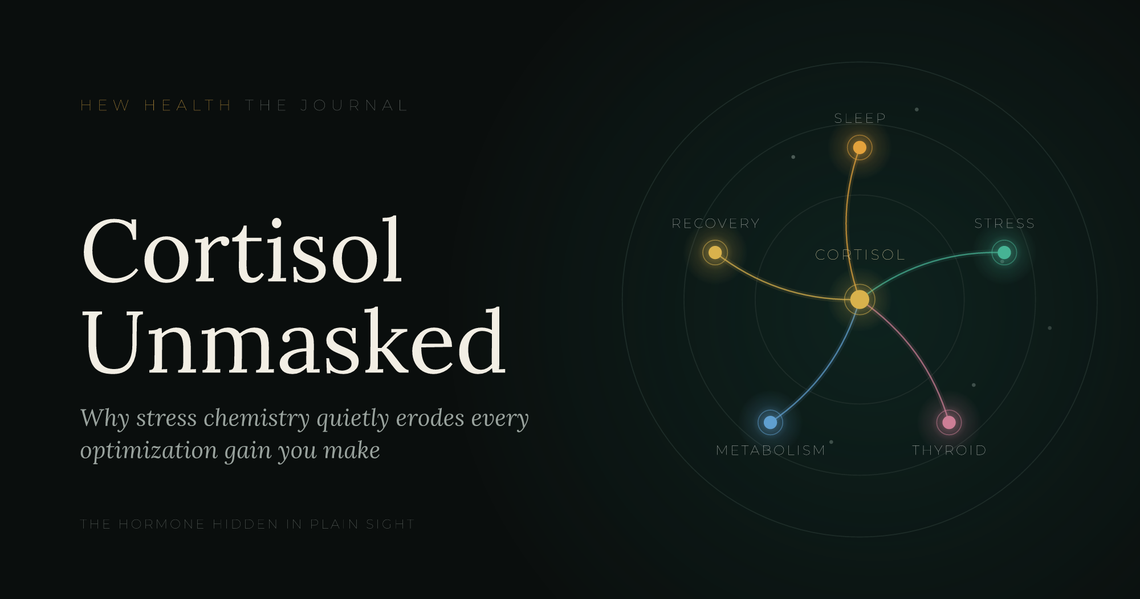
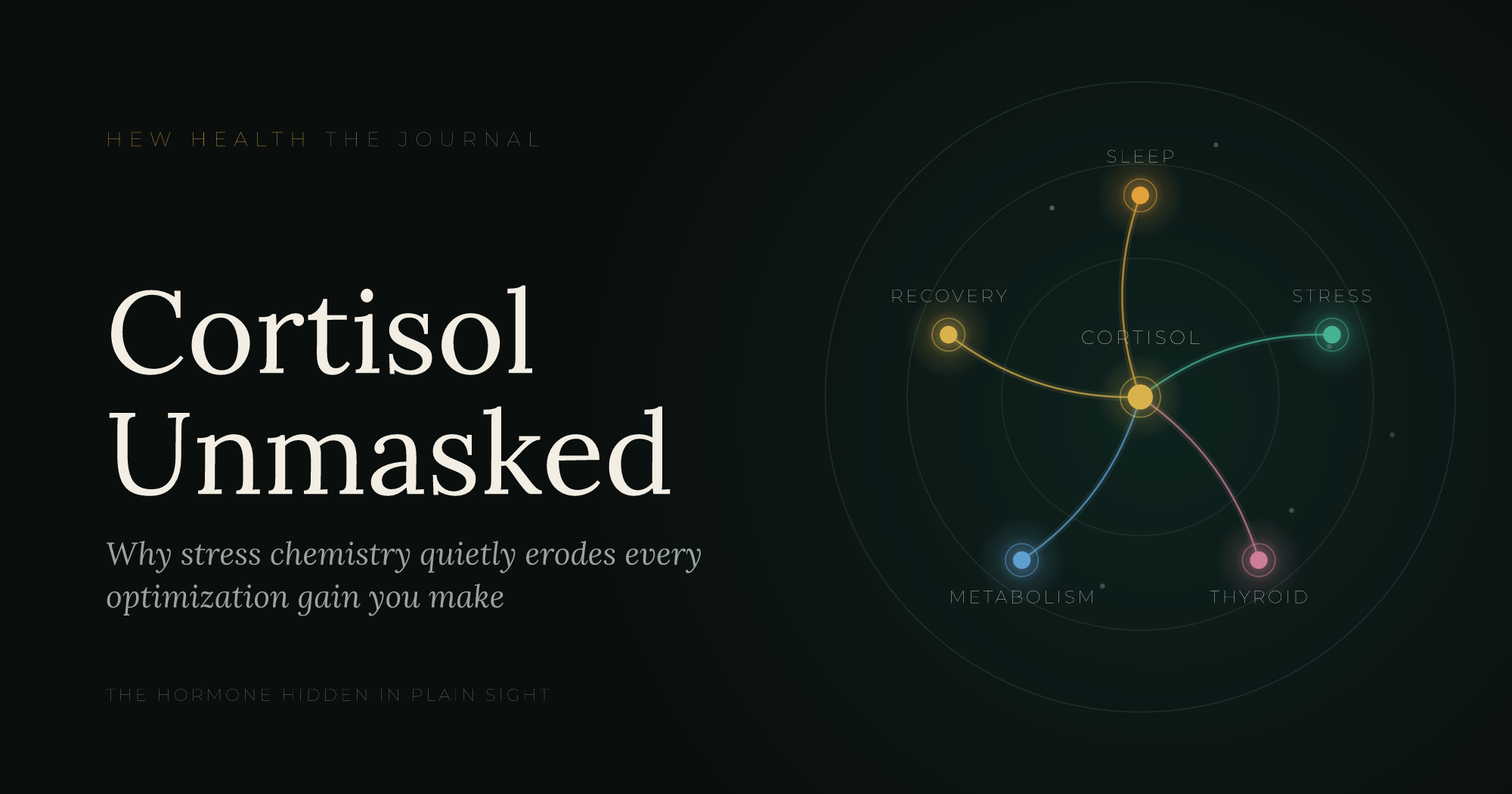
The HPA axis (hypothalamus, pituitary, adrenals) does not operate in a silo. It shares real estate with the HPG axis, which governs sex hormone production, and it borrows from the same raw materials, signaling molecules, and feedback loops.
A few mechanisms matter clinically:
- Pregnenolone allocation. Pregnenolone sits upstream of both cortisol and the sex hormones. When the adrenals are chronically signaled to produce more cortisol, less precursor is available for DHEA, testosterone, and downstream estrogens. The old term "pregnenolone steal" oversimplifies the biochemistry, but the clinical pattern (low DHEA-S alongside elevated or erratic cortisol) shows up constantly.
- GnRH suppression. Sustained cortisol elevation blunts gonadotropin-releasing hormone pulses at the hypothalamus, which lowers LH and FSH output. Your gonads receive a weaker signal, and your protocol has to work harder to compensate.
- SHBG shifts. Chronic stress and insulin dysregulation push sex hormone binding globulin in unhelpful directions, which changes how much free testosterone or estradiol you actually have available at the tissue level.
- Thyroid conversion. Elevated cortisol slows the conversion of T4 to active T3 and increases reverse T3. Patients feel cold, sluggish, and puffy even when TSH looks acceptable.
- Insulin resistance. Cortisol drives gluconeogenesis. Repeated spikes raise fasting glucose and insulin, and insulin resistance independently lowers testosterone in men and worsens PCOS-pattern symptoms in women.
You can see why a textbook-perfect testosterone or estradiol dose can still underperform. The receiving environment is hostile.
What Cortisol Dysfunction Actually Looks Like
In our practice, the presentations cluster into a few familiar shapes.
The wired-and-tired pattern: high cortisol at night, low in the morning. You feel exhausted at 7 a.m., need caffeine to function, get a second wind around 10 p.m., and then cannot fall asleep until 1. Sleep is fragmented at 3 a.m.
The flat-curve pattern: cortisol blunted across the entire day. Everything feels effortful. Exercise tolerance drops. You catch every virus that circulates through your kids' school. Libido is absent rather than diminished.
The morning-spike pattern: cortisol surges high at waking and stays elevated through midday. You feel anxious, jittery, and overly responsive to small stressors. Abdominal fat accumulates despite reasonable eating.
None of these are diagnoses. They are signals that point us toward more careful testing and a more nuanced protocol.
How We Evaluate It
A single morning serum cortisol tells you almost nothing about how the axis is functioning over a day. I prefer a four-point salivary or dried urine cortisol panel that captures the full diurnal rhythm, paired with DHEA-S, fasting insulin, HbA1c, a full thyroid panel including free T3 and reverse T3, and the sex hormone panel relevant to your protocol. In men, I want total and free testosterone, estradiol (sensitive assay), SHBG, and LH. In women, the timing of the draw relative to cycle (if still cycling) matters more than most labs acknowledge.
Sleep data from a wearable, even an imperfect one, often tells me more than another lab. If your deep sleep is averaging 18 minutes and your resting heart rate climbs overnight, your stress axis is the story.
What Actually Moves the Needle
Patients want to know what to do. The interventions are not glamorous, but they work, and they make every other piece of your hormone optimization protocol more effective.
Anchor your circadian rhythm
Cortisol is a circadian hormone before it is a stress hormone. Morning light exposure within 30 minutes of waking (10 minutes outside, no sunglasses) is the single highest-yield intervention I prescribe. Consistent wake time, even on weekends, matters more than total hours in bed. Dim the house after sunset. If you are working on a screen past 9 p.m., wear blue-blocking glasses or accept that your sleep architecture will pay for it.
Eat in a way that does not provoke the axis
Skipping breakfast and training fasted is fine for some people and disastrous for others. If your morning cortisol is already high, fasted high-intensity exercise pours fuel on the fire. Protein within an hour of waking (30 to 40 grams) stabilizes the morning glucose curve and reduces the cortisol response to training later in the day. Limit caffeine to before noon, and keep it under 200 mg if your sleep is fragmented.
Train smarter, not harder
I see a lot of high-achieving patients doing CrossFit five days a week, wondering why their testosterone will not climb. Strength training three to four times per week, zone 2 cardio on the other days, and one true rest day produces better hormonal outcomes than chronic high-intensity work. If your heart rate variability is trending down week over week, you are training your adrenals, not your muscles.
Address sleep apnea seriously
Untreated obstructive sleep apnea will defeat any hormone optimization protocol. It elevates cortisol, suppresses testosterone, and worsens insulin resistance. If you snore, wake unrefreshed, or have a neck circumference over 17 inches (men) or 16 (women), get a home sleep study. This is not optional.
Targeted supplementation, used judiciously
Phosphatidylserine in the evening can blunt nighttime cortisol in patients with the wired-and-tired pattern. Ashwagandha (a standardized extract, 600 mg daily) has reasonable data for lowering perceived stress and morning cortisol. Magnesium glycinate at bedtime supports sleep architecture. These are tools, not cures, and they work best alongside the foundational changes above.
Protocol adjustments
Sometimes the answer is adjusting the hormone optimization protocol itself. Low-dose DHEA in patients with documented deficiency can take pressure off the adrenal pathway. In select cases, we incorporate peptide protocols that support sleep quality and recovery, which indirectly improves cortisol rhythm. These decisions are individualized and require ongoing lab monitoring.
The Sequence Matters
If I had to give one piece of advice to a patient whose hormone optimization is underperforming: address cortisol and sleep before you chase another dose adjustment. I have watched patients spend a year tweaking testosterone doses when the real problem was 5.5 hours of fragmented sleep and three espressos a day. Fix the foundation and the protocol starts working the way it should.
If you have been on a hormone optimization protocol and your results have plateaued, or if you suspect cortisol is part of your picture, contact our team to discuss a more complete evaluation. The right testing and a coordinated plan can change what your protocol delivers.
This article is educational and does not constitute medical advice. Any therapy mentioned should be evaluated and prescribed by a qualified clinician based on your individual labs, history, and goals.
Related from Hew Health