Testosterone, Estrogen, and Beyond: How Comprehensive Hormone Optimization Addresses the Full Hormonal Picture
Most of the patients who walk into our practice asking about hormones have already had a testosterone level checked, or perhaps an estradiol. They've been told the number is "normal" or "low" and offered a prescription, or nothing at all. What they haven't been offered is context. A single hormone read in isolation is like reading one instrument in an orchestra and trying to judge the symphony.
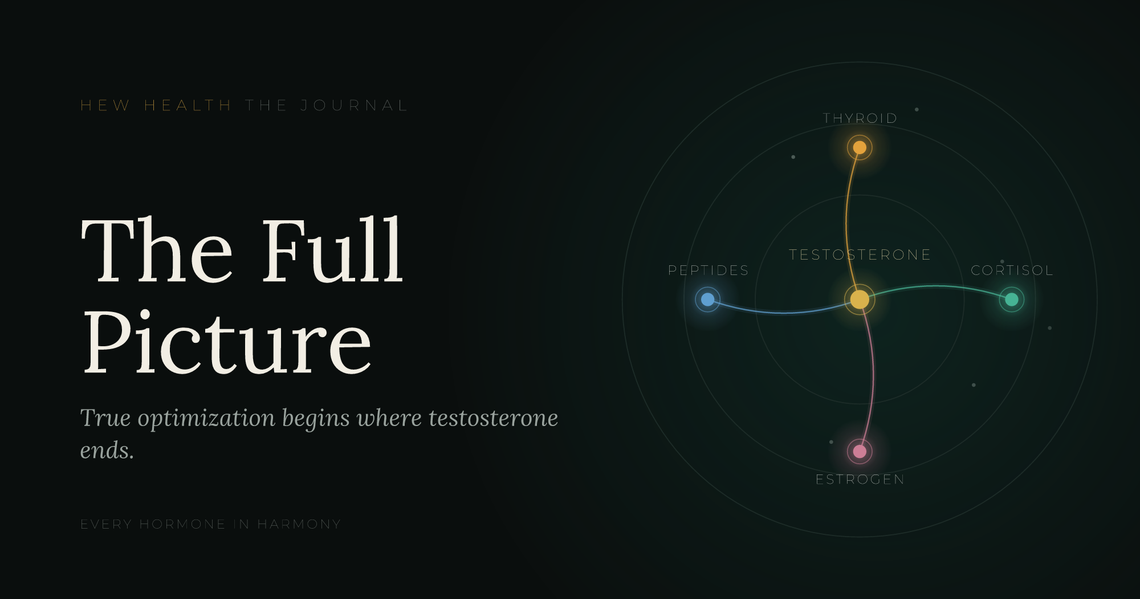
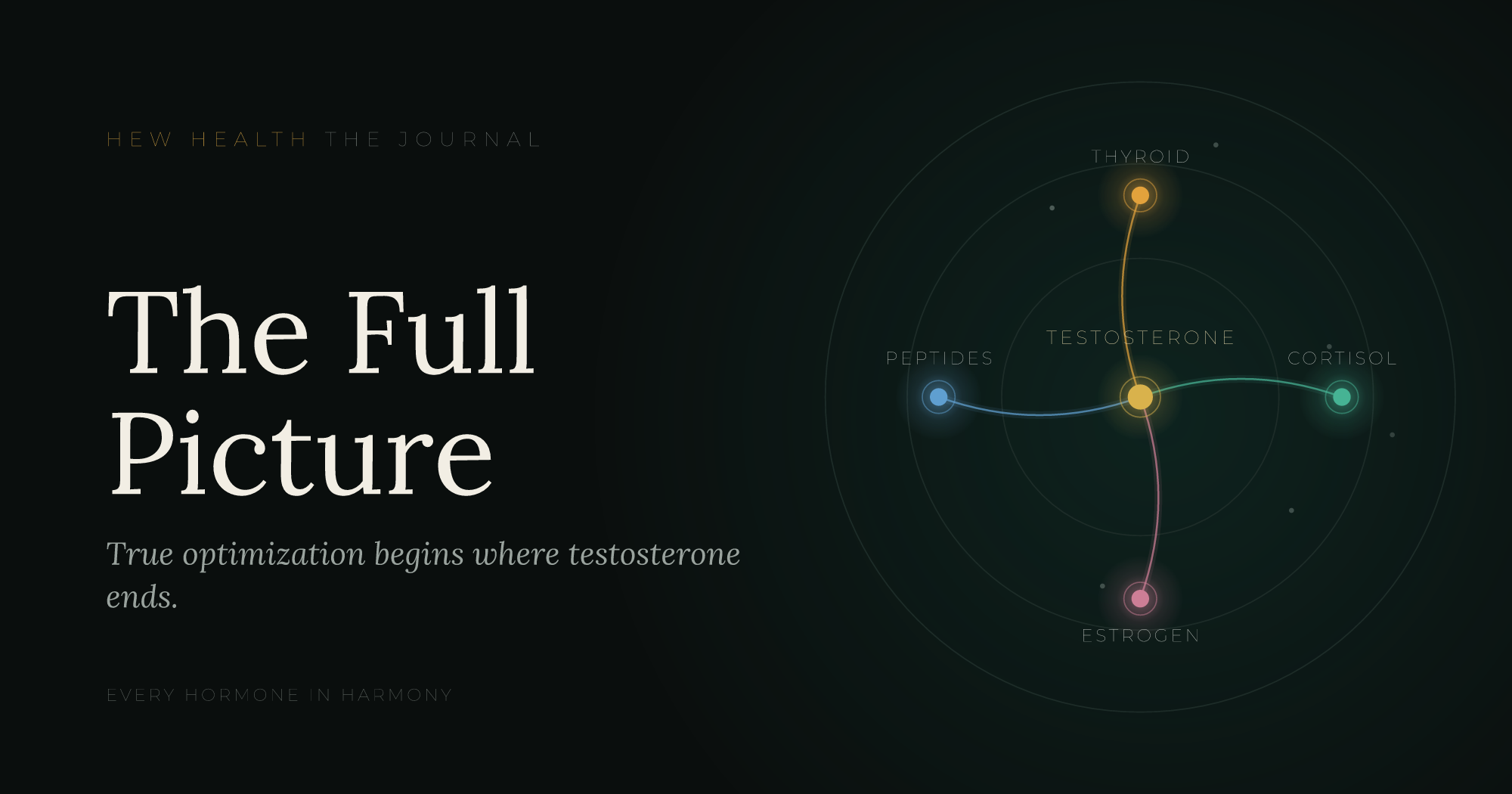
Hormone optimization done well looks at the whole system. Thyroid talks to cortisol. Cortisol talks to insulin. Insulin influences SHBG, which determines how much of your testosterone is actually free and biologically active. DHEA feeds both estrogen and testosterone pathways. Progesterone affects GABA receptors in the brain and changes how you sleep, which then changes your cortisol curve the next day. Pull one thread and the whole tapestry shifts.
Why the "Just Check Testosterone" Approach Falls Short
A 48-year-old man comes in with fatigue, low libido, and a stalled gym routine. His total testosterone is 380 ng/dL, which most labs flag as low-normal. Many clinicians stop there. We don't.
When we run a full panel, we often find his SHBG is elevated because his thyroid is sluggish, which means his free testosterone is actually in the basement. His estradiol is higher than expected because he's carrying an extra fifteen pounds of visceral fat, and adipose tissue is enzymatically active, converting testosterone into estrogen via aromatase. His morning cortisol is flat, suggesting his adrenals have been running on fumes for years. His fasting insulin is 14.
If we simply prescribed testosterone and walked away, we might raise his number on paper. We would not fix his fatigue. We might even make things worse by accelerating aromatization in a body already primed to convert. The real work is upstream.
The Hormones We Actually Measure
A thorough workup in our practice typically includes:
- Total and free testosterone, SHBG, and albumin
- Estradiol (sensitive assay, not the standard immunoassay, which is unreliable at lower male ranges)
- Progesterone, especially in perimenopausal women and in men where it serves as a precursor
- DHEA-S, the adrenal reserve marker
- Pregnenolone, often called the "mother hormone"
- Full thyroid panel: TSH, free T3, free T4, reverse T3, and thyroid antibodies
- Cortisol, ideally four-point salivary or DUTCH testing to capture the diurnal curve
- Fasting insulin, glucose, HbA1c, and a full lipid panel including ApoB
- IGF-1 as a proxy for growth hormone status
- Vitamin D, ferritin, B12, and magnesium, because deficiencies here mimic and worsen hormonal symptoms
That list looks long because it is. Hormones do not exist in tidy silos, and neither does symptom relief.
What Changes in Women, and Why Estrogen Alone Misses the Point
For women in their forties and fifties, the conversation has been dominated by estrogen for decades. Estrogen matters enormously. It protects bone, supports cognition, keeps the vaginal and urinary tissues resilient, and modulates mood. But focusing only on estrogen ignores three other players that often drive the symptoms women actually feel.
Progesterone declines years before estrogen does, often starting in the late thirties. The first symptoms of perimenopause (anxiety that arrives without warning, sleep that fractures around 3 a.m., heavier or more erratic periods) are frequently progesterone-driven, not estrogen-driven. Replacing estrogen without addressing progesterone can make these symptoms worse.
Testosterone in women is roughly ten times higher than estradiol by concentration, yet it is rarely measured and almost never optimized. Low testosterone in women shows up as flat motivation, diminished libido, loss of muscle tone despite training, and a particular kind of mental dullness that patients describe as "I just don't feel like myself."
Thyroid issues hide behind menopause symptoms with remarkable frequency. Cold intolerance, weight gain, hair thinning, and brain fog get attributed to "the change" when the real culprit is a free T3 sitting at the bottom of the range or autoimmune thyroiditis that no one tested for.
What Changes in Men, Beyond the Testosterone Number
Men in their forties and fifties are often handed testosterone with little attention to estradiol, which needs to be in a specific range, not crushed to zero. Aggressive aromatase inhibition leaves men with joint pain, low libido despite high testosterone, and accelerated bone loss. Estradiol in men supports brain function, cardiovascular health, and yes, sexual function.
We also pay close attention to insulin and cortisol in men. Visceral fat is hormonally hostile territory. It increases aromatase activity, drives inflammation, and worsens insulin resistance, which then suppresses SHBG and skews the entire panel. Optimizing testosterone in a metabolically unwell man without addressing the metabolic piece is treating the smoke and ignoring the fire.
The Adrenal and Thyroid Axis Nobody Wants to Talk About
Chronic stress, poor sleep, and years of pushing through have measurable consequences. The HPA axis (hypothalamic-pituitary-adrenal) eventually loses its rhythm. Morning cortisol that should be robust becomes blunted. Evening cortisol that should be low stays elevated, wrecking sleep. This dysregulation cascades into thyroid conversion problems, where T4 stops converting efficiently to active T3 and instead shunts into reverse T3, which blocks thyroid receptors.
You can give a patient in this state all the testosterone or estrogen you want. They will still feel terrible until the adrenal-thyroid axis is addressed, usually through some combination of sleep work, stress modulation, targeted nutrients, and occasionally low-dose thyroid or adrenal support.
How We Actually Build a Protocol
Comprehensive hormone optimization is iterative. We start with a detailed history and the full panel above. We look for the upstream drivers first: sleep quality, metabolic health, nutrient status, and stress physiology. Many patients see meaningful improvement before they ever start a hormone protocol, simply because we corrected a ferritin of 18 or a free T3 at the bottom of the range.
When hormone protocols are appropriate, we typically start conservatively and titrate based on both labs and how you actually feel. Numbers matter, but symptom response matters more. We recheck labs at six to eight weeks, then again at three months, then quarterly once we've found a stable rhythm.
Protocols may include bioidentical testosterone, estradiol, or progesterone, delivered in forms that match your physiology and preferences. They may include thyroid support, DHEA, or peptide protocols where clinically appropriate. They always include the lifestyle and nutritional groundwork that makes hormone therapy actually work.
What Comprehensive Care Looks Like in Practice
The difference between hormone optimization done well and done poorly comes down to whether someone is paying attention to the whole picture. That means a clinician who has time to read your labs carefully, listen to your symptoms, and adjust intelligently. It means follow-up that doesn't feel rushed. It means understanding that you are a 52-year-old woman with a demanding job and a family, not a lab value to be normalized.
If you've been told your hormones are fine but you don't feel fine, or if you've started a protocol that isn't delivering what you hoped, a more comprehensive evaluation often surfaces what's been missed. We'd encourage you to reach out to our team to discuss what a full workup might look like for you.
Hormones are not a quick fix, and anyone promising one is selling something. Done thoughtfully, with attention to the full system, hormone optimization can meaningfully change how you feel, function, and age. That's the work worth doing.
Related from Hew Health